REVIEW: The Dark Knight Rises (2012)

Nolan's back to finish off his Bat trilogy, but does the threequel live up to its predecessors?

REVIEW: The Amazing Spider-Man (2012)

Spidey's back, with Marc Webb's controversial reboot finally swinging into cinemas. Can he justify it?

REVIEW: Rock of Ages (2012)

So, as it turns out, yes, Tom Cruise *can* sing. What more do you want?

REVIEW: Prometheus (2012)

Ridley Scott marks his return to sci-fi with this sort-of-an-Alien-prequel. But does it live up to the hype?

REVIEW: Casa de mi Padre (2012)

Yep. It's all in Spanish. And it's all batshit crazy.

Showing posts with label Game. Show all posts

Monday, 5 March 2012

Assassin's Creed III Trailer


As promised on Friday, Ubisoft has revealed more details about the upcoming Assassin's Creed III, including a very tasty trailer.

According to a press release from the series developers, the main protagonist is called Connor and is of British/Mohawk (Native American) descent. His full name is Ratohnaké:ton, which isn't exactly the easiest moniker to remember.

Also, we never knew Native Americans had random punctuation in the middle of their names. Probably why Ubisoft went for Connor, though we're not sure how 'typical 18th Century' that name is.

Regardless, the game is to be set in the middle of the American Revolution, as we told you last week, and has been under development for three years on an entirely new engine. As you'll see from the following trailer...


Yes, it appears we finally have an assassin who can climb trees. Oh, and the huge battles on open terrain might be slightly new, too.

The game will apparently span coloniel and frontier towns, one of which we can see in the distance at the end of the trailer. So the classic freerunning through buildings and streets will still have a place in the new game, but now it looks as if snowy forests and open landscapes will be coming into play too.

Finally Ubisoft are giving us a full sequel, and it'll definitely be a day one purchase. Make sure to follow Cryteria for all the latest news on the game and a review when it hits shelves.

Assassin's Creed III will be released on 31st October 2012 for PlayStation 3, Xbox 360, Windows, and Nintendo Wii U.

Source and Photo: Official PlayStation Magazine UK

Friday, 2 March 2012

Assassin's Creed III News Round-Up


If you're a fan of the series, you've probably heard some or all of yesterday's announcements surrounding the new Assassin's Creed game. But, for those who haven't, and to collate all the details in one place, here's a round-up of everything we know about Assassin's Creed III.

There's a new protagonist - and a new location.


With the stories of prior protagonists Ezio and Altair all wrapped up in one neat little package dubbed Assassin's Creed: Revelations, the path is set for a new face, and a new locale for him to zip about in.  Ubisoft, rather surprisingly, have gone for the American Revolution. As for that face: we know nothing yet, apart from what we can insinuate from the above shot. For instance, his garb, clearly evolved from the robes of Ezio and Altair, hint at Native American origins - so maybe Chris Columbus was a Templar (though this would probably cause riots from our Stateside compadres)?

There's a whole host of new weapons.


As we're a fair few years on from the previous games, the weaponry available to our stabby hero has obviously evolved. From the boxart above, it looks like a small, handheld axe might be replacing the hidden blades - while initially seeming a backwards step, as it's a bit harder to conceal an entire axe, it's certainly more suited to the time period. The character also comes equipped with a Native American bow and arrow; a weapon likely to replace the crossbow of previous efforts, but one that needs a much longer range to be effective. Maybe we'll be seeing more open landscapes? The location certainly lends itself well to that sort of Red Dead Redemption-esque setting.

It's also obvious that while this is one of the last historical periods to place emphasis on bladed weaponry, the use of gunpowder is a lot more widespread by now. Case in point: the gun wielded by both pro- and antagonist in the above shots. Ezio had a primitive gun courtesy of Leonardo Da Vinci, so it's not a completely new prospect for the series.

It's been three years in the making.

"We will push the title a lot, because it's a fantastic product that the team has been working on for three years," said Ubisoft CEO Yves Guillemot. "What we have seen is just fabulous."

You won't be waiting too long for it.

Assassin's Creed III is due for release on 30th October 2012.

And there's still more to come...

Ubisoft are expected to announce full details of the game at 5pm on Monday, 5th March 2012.

Source: T3/The Guardian

Wednesday, 15 February 2012

Assassin's Creed III confirmed for October release


Back in November, a week before Assassin's Creed: Revelations was due in stores, we told you that developers Ubisoft had already planned another instalment. Now we have more details, and a release date, for the upcoming Assassin's Creed III.

The game will fall sooner than usual for the series, which has enjoyed a November release for the past few yearly instalments. The threequel, which is actually the fifth Assassin's Creed game, is set for release on 30th October 2012.

"We will push the title a lot, because it's a fantastic product that the team has been working on for three years," said Ubisoft CEO Yves Guillemot. "What we have seen is just fabulous."

With the length of time the developers have invested in this instalment, which has been under production since Assassin's Creed II in 2009, here's hoping for a complete series revamp, unlike previous games Assassin's Creed: Brotherhood (2010) and Assassin's Creed: Revelations (2011) - which simply added a handful of minor improvements.

Though the climax of Revelations suggests otherwise, it'd be nice to see a new assassin, perhaps in Victorian England (as we've suggested a few times in Creed articles - are you listening, Ubisoft?).

Source: Game Informer

Wednesday, 9 November 2011

Assassin's Creed III confirmed in all but title

As you can probably tell from past articles, I've taken a bit of a shine to the Assassin's Creed series. In fact, it's probably one of my favourite series of all time. And even though next week's release, Revelations, promises to tie up the story of pretty much every character we've seen so far, developers Ubisoft haven't quite done with the franchise just yet (don't look so surprised).

CEO Yves Guillemot announced during a recent financial earnings call that a new game will be released in 2012 - the fourth in as many years, starting with Assassin's Creed II in 2009 - promising "another great full-fledged Assassin's Creed title next year".

And it looks like this might finally be the next numerical instalment fans have been hoping for (yes, me). Guillemot released no further details, but promised: "It will be another major release and we will be communicating more about it in the coming months."

With Altair, Ezio and Desmond's 'cycles' concluding in Revelations (though surely cycles do not conclude, but simply start over?), the path looks clear for new protagonists, locations and stories to embrace the stunning world of Assassin's Creed.

And to echo a statement in my Revelations preview: here's hoping for something along the lines of Victorian England.

Source: thesixthaxis

Friday, 30 September 2011

Assassin's Creed: Revelations [Preview]

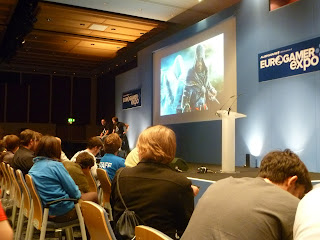
The Ubisoft developer’s conference which took place on Saturday, September 25th 2011 at Earl’s Court was, to say the least, an inspiring one. Showcasing the next instalment in the Assassin’s Creed series, subtitled Revelations, Ubi developers Brent Ashe and Raphael Lacoste teased an early gameplay sequence whilst also introducing us to the core themes of the game.

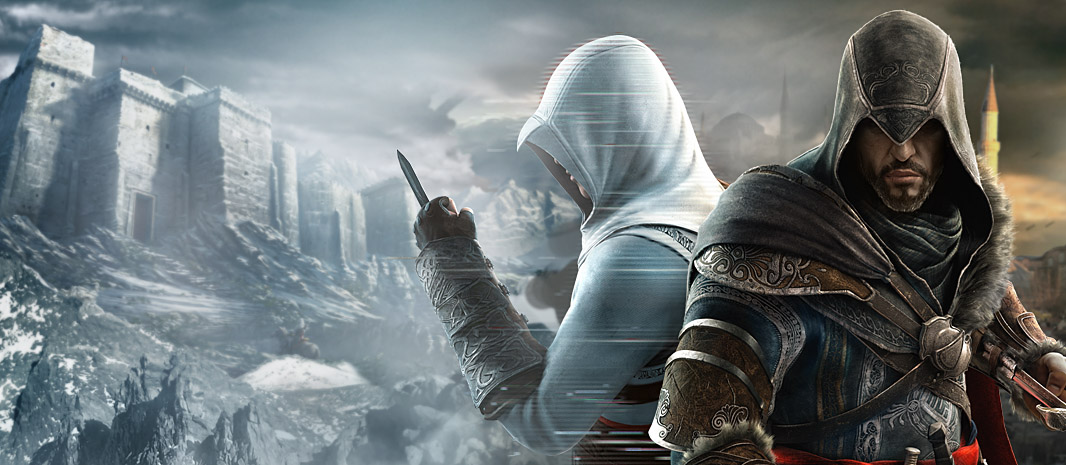
This is Ezio Auditore’s pièce de résistance; a closing chapter on the protagonist we’ve spent the past two instalments dealing with. But Revelations also brings back old flame Altair, star of the series’ inception into videogame lore, in a subtle yet ingenious move by Ubisoft. By involving two alternate characters, two highly contrasting milieus are afforded to the player, with exceptional results. It’s a lot more work for Ubisoft’s art directors, but it’s certainly rewarding.

Ezio’s older now - “he’s wiser and more focused,” said Ashe of the returning assassin. “He’s a lot more like Altair now; he never wanted to be an assassin, but now he is and he’s a lot more focused and driven than we saw in the past two games.” Put simply, Ezio’s grown up. And this is, according to Lacoste, partly down to his extensive travels over the years between previous instalment Brotherhood and November’s Revelations - from clothing items he’s collected to more personal changes.

Yes, apparently Ezio’s been on a bit of a soul-searching journey. “He’s been travelling, but it’s not just been a physical journey, it’s also been on a personal level.” Ashe states, suggesting Ezio’s newfound maturity is down to a more enlightened level of thinking. “He’s been looking inside himself and looking back over his life and how it turned out like that.” So Ezio’s back, but it’s not the Ezio we once knew.

To touch upon the gameplay element for a moment; one striking moment during a battle between Ezio and Templar agents sees a ghostly shadow of Altair appear in the foreground, turning and walking away. This connection between the two ancestors of present-day protagonist Desmond is the central theme of Revelations; the game’s story, as per the title, will offer some narrative closure to players after three chapters of mystery and codes, tying up Ezio and Altair’s respective stories. Here’s hoping a full-blown sequel, with new settings and characters, is lined up for 2012/3.

Of course, it’s not just all ‘this happened because of this, these guys are actually the good guys,’ and whatnot. Ezio’s journey might once have been spiritual, but now it’s firmly back in the physical. The game opens in Masyaf, setting of the first Creed game, now doused in whites and greys and blemished with a wintry sleet. Ezio’s looking for a library left behind by Altair; the latter’s legacy, built underneath a fortress high in the mountain reaches. But he finds the place swarming with Templars, and so begins a ferocious battle which sees Ezio felled and captured.

After a narrow escape, we see the aged Italian fleeing in a carriage, pursued in force by Templar agents. Ashe promises the entire sequence will be playable in the final game, but for now it’s a rather lovely cinematic. The lighting and textures have also improved since last year’s Brotherhood, and it’s quite noticeable. Lacoste’s artistic team have developed a huge new sandbox to play in across the Ottoman Empire, from Masyaf to Constantinople, where Revelations eventually takes our vigilante hero.

Ubisoft have also integrated a range of new gameplay mechanics, from a ‘hook blade’ tool that blends combat and navigation - think zip-wires and aerial attacks - to an enhanced Eagle Vision that allows Ezio to see his target’s path. Also new to the Creed series is the ‘bomb factory’; a pouch Ezio carries that allows him to construct his own bombs from various ‘ingredients’ that can either be bought or found (often on corpses). For each bomb, three different factors are decided - type of shell, gunpowder and effect - to assign the weapon into one of three categories; lethal, tactical or diversionary.

Take the Cherry Bomb - a classic diversionary tactic, it’s effectively a grenade thrown to act as a decoy. Of course, one might argue that Assassin’s Creed is straying ever closer to modern weaponry - from Ezio’s projectile firing wrist mechanism in ACII (i.e. his gun) to the grenades and landmines the bomb pouch offers - but the way it’s dressed in the time period, to such great effect, should still keep players completely immersed in the era.

A second spin-off for the Assassin’s Creed series might not be on the priority list for fans of the series, particularly re-using old characters, but its titular promise of answers to some pressing story questions, combined with a refreshing mix of new gameplay elements and beautiful locations, should give players enough to tide them over until the next full blown sequel. For which, by the way, I’d just like to throw out the suggestion of 19th Century Victorian England. Maybe with a brand new female assassin. Anyone?

Tuesday, 23 August 2011

Coming Soon: Eurogamer Expo 2011

So, this year I shall, for the second time in my life, be attending the Eurogamer Expo. The last time this happened was in 2009, when for one year, and one year only, the convention was brought to Leeds. Apparently, the North was rendered futile, as it hasn't returned since. Luckily, I'm moving down South in a month, just a week before the expo. Good timing, no?

Regardless, with the vast amounts of playable content there - including huge titles such as Batman: Arkham City, Elder Scrolls V: Skyrim, Uncharted 3: Drake's Deception and Mario Kart 7 - I'll soon be creating a tab dedicated purely to the expo, where you'll be able to find previews on everything I can get my hands on during my eight hours there.

For now, I'll leave you with a link to what's on at the expo, and thus what you can expect to be reading about in just over a month.

Stay tuned.

Tuesday, 16 August 2011

Driver: San Francisco [Preview]

The Driver series originally surfaced back in the days of the original PlayStation, with the emphasis firmly on the driving side of things. You couldn’t get out of your car, wander round and start shooting people; back then, this wasn’t just another Grand Theft Auto clone (and rightly so, considering the first two games were actually released whilst GTA was still in aerial view mode). Since 1999, however, the series has fluctuated wildly (the less said about Driv3r, the better).

Now we’re twelve years down the line, and less than a month away from Driver’s latest offering, San Francisco. You can’t get out of your car anymore, a feature introduced way back in 2000 with Driver 2. But you can get out of your body.

New gimmick/mechanic/USP ‘shifting’ allows the player to, well, shift between cars. Returning protagonist Tanner has been left in a coma (though developer Reflections assures us it’s “not the Bobby Ewing moment in Dallas - it’s crucial to the story”), and within his coma-induced state of mind, he’s led to believe he can transport his consciousness remotely to other cars with a quick tap of a face button. Or rather, that’s the bit we’ll be doing.

But it really is just as easy as that; a press of 'X' (or the Xbox equivalent) and you’re floating above the streets of San Fran, as everything runs in slow motion below you while you find another car to zip into. Sounds nuts, right?

It's lucky for Reflections, then, that their chimerical mechanic has so many potential applications. Take the race level I played; a father-daughter team need to finish in both first and second to be victorious, winning a trophy or their pride or something. Tanner, good guy that he is, decides to ‘help out’. Over the course of two laps, it’s your job to make sure both cars finish in the desired position by constantly switching between them, bringing both up to speed. It definitely makes for a more intense and interesting experience than your standard racing fare.

And there’s plenty more intriguing gameplay where that came from. It’s not just about winning races or escaping from cops; there’s a strategic element to shifting, which quickly becomes obvious. Where’s the sense in endlessly chasing villains when you can shift into a bus, creating an instant roadblock just a few feet ahead?

If things are starting to sound a bit daft, that’s probably because they are. San Francisco takes itself far less seriously than previous Driver instalments; particularly the last console iteration Parallel Lines, the first (and only) game of the series to be rated 18. It’s evident from the off, not least in the humourous scripting and banter between the two leads (Tanner is joined by his partner, Jones). The changes and indeed the shift mechanic have apparently come about as a desire to "[avoid] trying to duplicate anything that is being done in other open world action driving games."

Of course, with the renewed focus on driving (the game is called Driver, after all), it’s important that the cars play their part. Licensed cars are new to the series, and each one feels like a character in itself - the personality each vehicle has will resonate instantly as you get to grips with it; whether fragile and classy or packing a serious punch, you’ll soon have a few favourites you won’t be able to help yourself from shifting into the second you see them (I claim the Delorean!).

Reflections’ new gimmick might seem like a step backward - removing the ability to leave your car - and slightly silly, but the seamless execution shows promising signs of a series reformed. Driver's trying to be unique again - something that can only be commended - and while it's a risk, it's one that looks to have paid off.

Tuesday, 15 March 2011

FIFA 11 [Review]


It’s been nigh-on eight years since I owned a non-handheld football game. Nowadays it’s all about the shooters, the music games; heck, even the LEGO games have become frustratingly addictive. So why invest in FIFA 11? Not least because it’s supposedly just ‘FIFA 10 with new kits’, as some scorners would have you believe, nor with last year’s game dropping to the price of a McDonald’s meal the second this launched. The answer is painfully simple: a change of pace. But a fresh change of pace, nonetheless. And boy, does it deliver.

Let’s start on the surface. Graphically, FIFA manages to show off the technological prowess of today’s next-gen HD glory with confidence; whilst admittedly not reaching the dizzying heights of games developed exclusively for PlayStation 3 (here’s looking at you, Uncharted 2), it’s still something to write home about. Animations are spot on; players react instinctively to the ball, linesmen dive, hands over heads, as they fall victim to another misplaced cross, and even the referee is guilty of a little human error every now and then, getting in the way of a perfect pass or tripping over somebody’s heels. Weather conditions are good, but not perfect: I’d like to see shadows fall further over the pitch as the match progresses; to the best of my knowledge, the Earth rotates around the Sun, thus allowing for a 24-hour day cycle. It seems in FIFA 11 you’re getting 24 hours of afternoon haze.


The sounds are all there too; crowds screaming ambiguous chants, players calling to each other, interacting and reacting realistically to situations (“Man on!”), the usual sound effects and menu music. But that’s where things change. Got a few gigabytes of music stored on your hard drive for a rainy day? No need to reach for the umbrella; FIFA has you covered. A few clicks and you’ve got your very own personalised menu music, stadium chants and winning songs. I’ve had 'Sweet Child o’ Mine'  blasting throughout ‘Valley Parade’ (read: renamed generic stadium) every time Bradford City score a goal - so in reality I’ve heard it about twice this season - and a sorrowful 'Under the Bridge' upon suffering defeat, a tune which has played far too often for my liking.

A slightly less brilliant feature of FIFA 11’s sound banks is the commentary. Ah yes, the ‘wonderful’ Martin Tyler and Andy Gray, legendary in football commentating, and more grating than sliced mozzarella. Captain Obvious and his wonderful sidekick Andy will just about manage to get you through the first half without you tearing your hair out. Then half time’s over and you’re flat out, bald as a new-born churchmouse, tears rolling down your cheeks. “Stopping the ball; that’s an important part of his job today,” balks Tyler, obviously coming to the sudden realisation that the goalkeeper is more than just a pretty face. Of course, they’ll offer the odd witty remark, commenting on the two teams’ league standings, perhaps, or having a chuckle at the referee’s negligence when he wanders into the middle of a strong attack. But for the most part, you’ll want to turn the commentary way down, and everything else up. Even the constant sound of Rooney grunting at his teammates is more bearable.


But beauty (for the most part) is more than just skin deep. The gameplay handles swimmingly, though not perfectly, with differences in skill level obvious between different leagues. That said, though, much relies on the human controller: I managed to grind out a 1-1 draw as Oxford United against Argentina (admittedly losing 3-1 in extra time). Passing is fluid, but the ‘power’ behind each touch makes little difference, with strong passes remaining infrequent, and often the ball trundles along the pitch at intolerable speeds. On top of this, playing with lower league teams is frustratingly inconsistent; as Bradford City, one game I might beat Sheffield Wednesday 3-0 whilst the next I face a 4-0 thrashing at the hands of Gillingham. Players rarely run to keep up the flow of play, lazily allowing the ball to be intercepted by the opposition. Whilst you might think this is simply a result of Bradford being rubbish - and I might be inclined to agree in part - it’s evident in higher leagues too. Heck, even the international teams suffer; my England vs. Germany replay was more painful than the original 2010 World Cup hammering.

With all this negativity, you might be baffled as to earlier mention of beauty and swimming and whatnot. But fear not: football isn’t called ‘the beautiful game’ for nothing, and FIFA 11, on a whole, manages to capture it. Whether it’s driving home an overhead kick, breaking off for a completely unprecedented counter attack and winging it past seventeen defenders, or simply walloping Leeds United 6-0, you’ll be hard-pressed to find a better sense of satisfaction in gaming, not least from a football game.

You’ve probably played a football game at some point in your life. You know how it works. All you really need to know is this: the gameplay is solid, if a little touchy. Barring commentators, sound-wise, everything is spot on. And graphically? It’s astounding. But most of all it’s the little things you’ll be amazed at in this. And you’ll still be stumbling upon them by the time FIFA 12 is out.

✰✰✰✰

Platforms: PS3, Xbox 360, Windows, iOS, PS2, PSP, Wii, DS
Genre: Sport, football, simulation
EA, 01/10/10

See also: FIFA 10 (2009), Pro Evolution Soccer 2011 (2010)


Images: The Guardian, EADestructoidXboxer360

Monday, 14 March 2011

Assassin's Creed: Brotherhood [Review]

The annual leapfrog contest had taken a turn for the worse...
Before going into the main review, I feel I must concede that I had reserved judgements about Brotherhood; Assassin’s Creed 2.5? The lack of an unoriginal setting or protagonist worried me. Whilst Assassin’s Creed II was a joy to play, and Ezio de Auditore a formidable vehicle with which to unleash Ubisoft’s unique blend of killer capabilities, I felt his story was done; yes, there were a few loose ends, but an extra batch of downloadable content could have cleared that up, leaving the way for a brand new assassin (possibly in a Victorian London locale?). Luckily, any doubts I had were assuaged almost immediately - and that was before I got stuck into the online mode.

Brotherhood follows on from its predecessor in the manner the second game took towards its chronology; months and years can pass and you’ll never know any different unless you happen to notice the date given at the start of each sequence. Much in the same vein, it’s difficult to tell just how soon after the ending of ACII this is set based solely on differences in location and character. The story opens much in the way I assumed life would be like for the protagonist following the end of the last game; a legendary assassin, capable of saving the free world… retiring to a quaint country home. Of course, it doesn’t last; else this would be a review of Country Living Simulator 2011. The menacing, murderous and incestuous Borgia clan have come to wreak havoc upon Italy, taking over Rome, and inevitably the burden falls to you to free the city from the shackles of tyranny. With just one city featuring in Brotherhood, the game might at first feel heavily downsized from ACII, but this is soon rectified by its scale, with all its emphatic beauty and historical accuracy making it a pleasure to travel through. On the other side of this, of course, having one larger city does inevitably lead to a lot of travelling; by the time you reach the final memory sequence you’ll know the citadel like the back of your palm. Of course, that doesn’t negate the large amount of running around on horseback you encounter, but it does help to alleviate the stop-start nature of having to look at your map at every corner.


No animals were harmed during the making of this game. Probably.
Whilst Brotherhood’s single player may feel strenuously similar to ACII for the first few memory sequences, a multitude of subtle improvements have been made. The ability to fight on horseback removes the need to stop at every guard post to bump off a few troublemakers - ride, swing, and stab, ride, swing, and stab. It’s a well-implemented system, not to mention efficient. An almost excessive amount of side quests also help to keep you busy during the course of the game; everything from repairing aqueducts to burning towers to rebuilding shops. A feature you might remember from ACII, the shop system has been upgraded here, further stressing the economic fluency of the game - for each area, first the captain must be assassinated, and then his watchtower burned, in order to release it from Borgia control. Then all shops and merchants in the area become available for renovation, which, whilst carrying an initial outlay, provides several advantages: discounts, new items and, most importantly, a higher revenue stream in the bank.

With all this talk of rebuilding cities, purchasing upgrades and such, you might be forgiven for thinking you’ve suddenly started reading a review for the next Elder Scrolls game. Brotherhood contains elements of an RPG, admittedly, but at heart it’s purely about the adventure. The abundance of side quests is merely a momentary distraction for those with short attention spans (or perhaps the obsessive trophy collector), while the real meat of Assassin’s Creed sits purely in its main campaign. An even greater variety of mission styles greets you here than with Brotherhood’s predecessor; stalking your opponents, infiltrating enemy structures and gatherings, straightforward ‘running and gunning’ - even impersonating masked officials in order to reach your target. The depth and detail of the bustling city of Rome will not fail to astound as you work your way through the memory sequences, which are never a chore. And at around fifteen to twenty hours’ worth of campaign to be had at, there’s plenty to get stuck into. Roll on the inevitable downloadable content (the first of which is rumoured to concern Da Vinci)! 


Who said men can't multitask?
While Brotherhood’s ending will leave a bittersweet taste in your mouth - suffice to say we can expect at least one more instalment - there’s no reason it should stop you exploring the main addition to the series. The online-only multiplayer offered at the title screen is a first for the Assassin’s Creed games, and sets up a ‘cops and robbers’ style environment contained within a range of moderately sized maps. Filled with identical character models of various classes, the primary objective of the [admittedly few and far between] game modes centres on identifying your target amongst the masses. If done right, this can result in tense and thrilling games, stalking your prey for the slightest hint of human error that might give away their position. Of course, there’s always the odd fool who’ll run across the rooftops and alert everyone to his presence within seconds - but the game rewards subtlety; more points are given for the killer your target never sees coming, until his carcass lies on the dusty pave below, whilst minimal score is awarded to those who gallivant about in broad daylight. In effect, this means just a few well-placed assassinations can win the game against someone with ten kills who blunders about noisily. Brotherhood rewards the art of the kill; the style, sophistication and subtleties of the Creed. And it is in this way that it succeeds. Call of what?

It’s to Brotherhood’s credit, then, that it does its online component so well. With such similarities in character and style to ACII, the multiplayer might even be argued as its main hook - and it’s a hook which will hold Ubisoft’s series high, high up for as long as it might see fit (that is, until next time). The single player campaign is simply a bonus, and a ridiculously in depth one at that. To say that Assassin’s Creed: Brotherhood is well deserving of its praise would be quite an understatement: it’s a gleaming, bloody blade of triumph for Ubisoft’s killer series. 


Platforms: PS3, Xbox 360, Windows, Mac OS X
Genre: Historical action/adventure, stealth
Ubisoft, 19/11/10

See also: Assassin's Creed (2007), Assassin's Creed II (2009)